
SERVICES
Termite Inspections
Professional termite inspections for homes and businesses across Blacktown to identify termite activity before serious damage occurs.
What Are Termite Inspections?
Termite inspections involve a detailed assessment of a property to identify evidence of termite activity, timber damage and conditions that may increase the risk of future infestations. Unlike many household pests, termites often remain hidden inside walls, roof timbers, subfloors and other structural areas, making early detection important. During an inspection, accessible parts of the property are carefully checked for mud leads, damaged timber, moisture issues, termite workings and other warning signs. In Blacktown and surrounding suburbs, termites remain active throughout the year because of the local climate and established residential areas. Many homeowners are unaware of termite activity until noticeable structural damage has already occurred. Regular termite inspections help detect problems early, allowing treatment to begin before termites spread further through the property. Routine inspections also help identify environmental conditions that make buildings more attractive to termites, reducing the likelihood of ongoing infestations and costly repairs.
Why Choose Greener Pest Solutions for Termite Inspections
Thorough Property Assessment
A termite inspection involves more than looking for visible termites. Greener Pest Solutions carefully examines accessible structural areas, timber elements and conditions that commonly encourage termite activity around residential properties.
Focus On Early Detection
Finding termite activity early helps reduce the likelihood of extensive structural damage. Every inspection looks for subtle signs that homeowners often overlook before obvious damage becomes visible.
Practical Property Advice
After completing the inspection, customers receive practical recommendations to help reduce moisture, timber contact and other conditions that commonly attract termites to residential properties.
Family Owned Local Business
As a family owned business, Greener Pest Solutions provides straightforward communication and clear explanations throughout the inspection process, helping property owners better understand the condition of their home.
What Termite Inspections Cover
A termite inspection includes examining accessible roof spaces, subfloors, internal rooms, exterior walls, fences, timber structures and surrounding areas for evidence of termite activity. The inspection looks for mud tubes, damaged timber, moisture problems, termite workings and environmental conditions that increase the likelihood of infestation. Practical recommendations are also provided to help reduce future termite risks around the property.
Signs You Need Termite Inspections
Hollow sounding timber, bubbling paint, tight fitting doors or windows, mud tubes on walls or foundations and small piles of timber dust can all indicate possible termite activity. Swarming flying termites around lights during warmer weather may also signal a nearby colony. Even without visible signs, regular inspections remain important because termites often cause damage long before they are noticed.
DISCOVER WHAT OUR CUSTOMERS HAVE TO SAY ABOUT US
REVIEWS
REVIEW US ON GOOGLE
our process
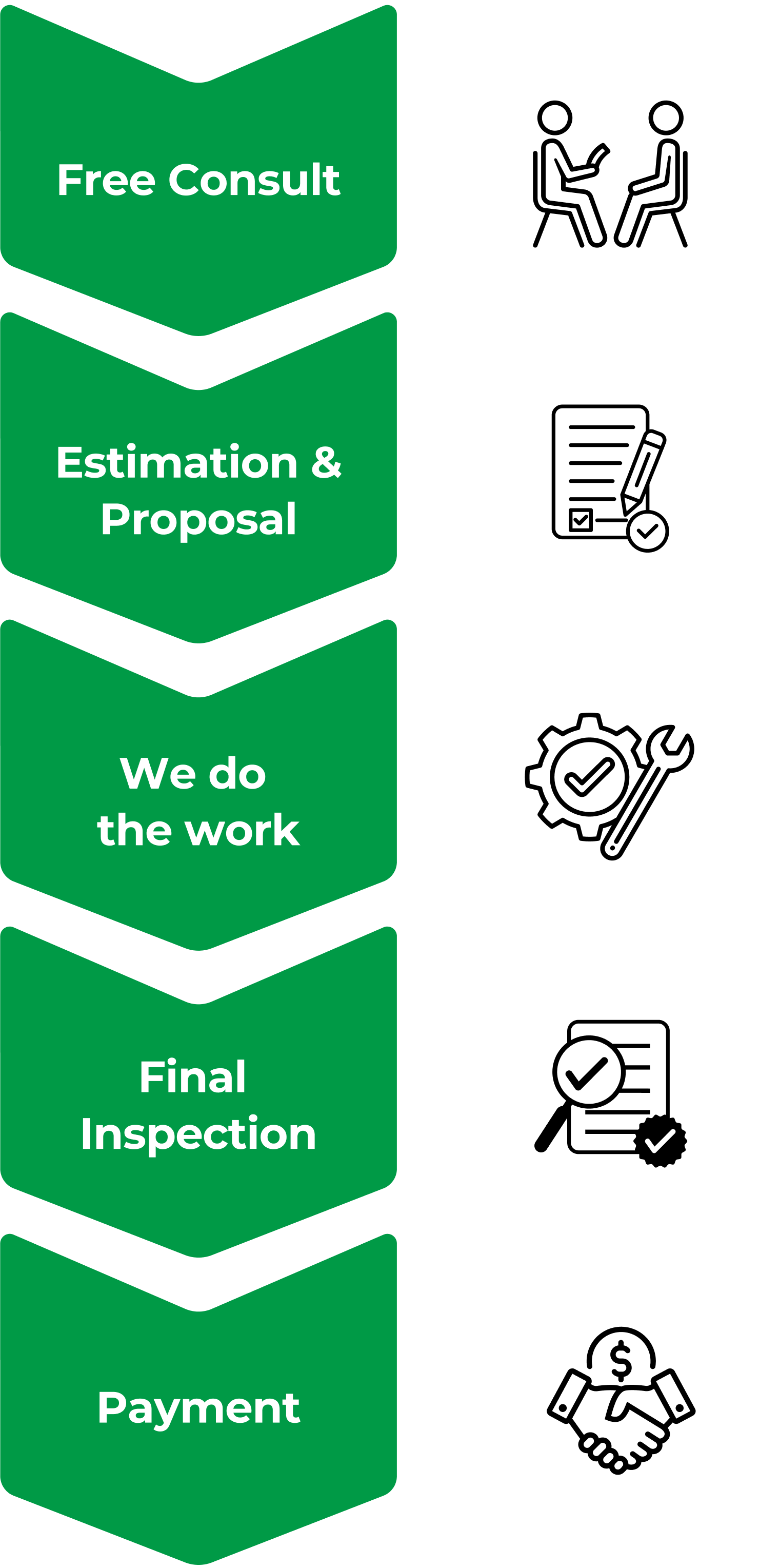
Our process is simple and only contains a few simple steps

frequently asked questions
How often should I have a termite inspection?
Many Australian properties benefit from regular termite inspections, particularly in areas where termite activity is common. Inspection frequency depends on the property's construction, location and surrounding environmental conditions.
Can termites be present without visible damage?
Yes. Termites often remain hidden inside timber, wall cavities and subfloors while feeding from the inside out. Significant damage can occur before external signs become obvious.
What areas are checked during a termite inspection?
Accessible roof spaces, subfloors, internal rooms, external walls, timber structures, fences and surrounding areas are inspected for termite activity, damage and conditions that increase termite risk.
What are mud tubes?
Mud tubes are narrow tunnels built by termites to travel safely between the soil and timber while retaining moisture. They are one of the most common indicators of termite activity.
Can a termite inspection prevent termite damage?
An inspection cannot stop termites from entering a property, but it can identify activity early and highlight conditions that increase termite risk before extensive structural damage develops.
READY TO take the next step?
get a free quote TODAY!
Greener Pest Solutions
48 Kerwin Circle, Hebersham NSW 2770


